
Dental Implant vs Dental Bridge: What’s the Difference?
When replacing a missing tooth, two commonly discussed treatment options are dental implants and dental bridges.
Both treatments are designed to address missing teeth, but they work in different ways and may be suitable for different situations.
Understanding the differences between these options can help you have a more informed discussion with your dentist when considering treatment.
What Is a Dental Implant?
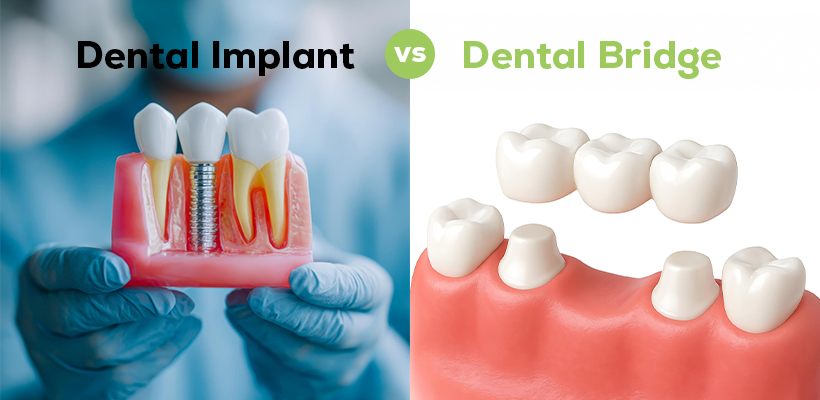
A dental implant is a tooth replacement option designed to replace the root of a missing tooth. The treatment involves placing a small titanium implant into the jawbone, which acts as an artificial tooth root. Once the implant has integrated with the surrounding bone, a custom-made restoration is attached to restore the appearance and function of the missing tooth.
The restoration generally consists of:
- Implant fixture
- Abutment
- Dental crown
Unlike some other tooth replacement options, dental implants are designed to function independently and do not rely on neighbouring teeth for support. Suitability for treatment can only be determined following a clinical assessment.
What Is a Dental Bridge?
A dental bridge is a fixed dental restoration used to replace one or more missing teeth. The restoration works by using neighbouring teeth for support, effectively "bridging" the gap created by the missing tooth or teeth.
A bridge generally consists of:
- One or more replacement teeth
- Supporting crowns attached to neighbouring teeth
Dental bridges use adjacent teeth for support and may be recommended in certain situations. Your dentist will assess whether a bridge is appropriate based on your oral health and the condition of the surrounding teeth.
Key Differences Between Dental Implants and Dental Bridges
While both dental implants and dental bridges are used to replace missing teeth, they differ in several important ways. These differences may influence treatment planning, maintenance requirements, and overall suitability. Understanding how each option works can help you have a more informed discussion with your dentist about the most appropriate treatment for your situation.
How They Are Supported
Dental Implant
- Supported by the jawbone: The implant is placed into the jawbone, where it acts as an artificial tooth root.
- Functions independently: Dental implants do not typically rely on adjacent teeth for support.
Dental Bridge
- Supported by adjacent teeth: The Bridge is anchored using crowns attached to neighbouring teeth.
- Relies on neighbouring teeth for stability: Supporting teeth help maintain the position and function of the bridge.
Treatment Process
Dental Implant
Dental implant treatment generally involves the surgical placement of an implant into the jawbone. Following placement, a healing period is usually required before the final restoration can be attached. Depending on the individual's circumstances, treatment may be completed over multiple stages.
Dental Bridge
Dental bridge treatment does not typically involve implant surgery. The procedure often focuses on preparing the supporting teeth and fabricating the bridge restoration. In some cases, treatment may be completed in a shorter timeframe than dental implant treatment.
The most appropriate treatment depends on individual clinical circumstances.
Impact on Adjacent Teeth
Dental Implant
Because dental implants are supported by the jawbone, neighbouring teeth generally do not need to be modified as part of treatment. This can make implants a suitable option in cases where adjacent teeth are healthy and intact.
Dental Bridge
Dental bridges rely on neighbouring teeth for support. In some situations, these teeth may need to be prepared to accommodate the supporting crowns that hold the bridge in place.
Treatment recommendations depend on the condition of adjacent teeth and overall oral health.
Maintenance Requirements
Regardless of whether you choose a dental implant or a dental bridge, ongoing maintenance plays an important role in supporting long-term oral health. Both treatment options generally require:
- Daily oral hygiene
- Routine dental check-ups
- Professional dental cleans
Your dentist may also provide specific care instructions based on the type of restoration provided and your individual oral health needs. Maintenance recommendations may vary according to the type of restoration provided.
Which Option May Be Suitable for You?
The most appropriate tooth replacement option depends on several factors, including:
- Number of missing teeth
- Oral health condition
- Bone support
- Gum health
- Existing dental restorations
- Personal preferences
A dental assessment is required before treatment recommendations can be made.
Benefits and Considerations
Both dental implants and dental bridges have their own considerations. The most suitable option will depend on your oral health, treatment goals, and clinical circumstances.
Dental Implants
Potential considerations may include:
- Independent tooth replacement: Dental implants are designed to function independently and do not typically rely on neighbouring teeth for support.
- Surgical treatment: Implant placement involves a surgical procedure and may not be suitable for every patient.
- Longer treatment timeline: Treatment often occurs over multiple stages and may include a healing period before the final restoration is placed.
Dental Bridges
- Fixed restoration option: Dental bridges provide a non-removable solution for replacing missing teeth.
- No implant surgery required: Bridge treatment generally does not involve surgical implant placement.
- Reliance on neighbouring teeth: Supporting teeth are used to anchor the bridge and may require preparation as part of treatment.
As with any dental treatment, suitability varies between individuals and should be determined through a professional assessment.
Why a Professional Consultation Is Important
Every patient's situation is different.
During a consultation, your dentist may:
- Assess your oral health
- Review missing tooth areas
- Discuss treatment goals
- Explain available options
- Develop an individualised treatment plan
This can help ensure recommendations are tailored to your needs.
Considering Tooth Replacement Options?
If you have one or more missing teeth and would like to understand your treatment options, New Age Dental™ can provide a comprehensive assessment and discuss suitable solutions based on your individual needs.
Frequently Asked Questions
Neither treatment is universally better. Suitability depends on individual oral health, treatment goals, and clinical assessment.
In some cases, dental bridges may be used to replace more than one missing tooth.
Yes. Dental implant treatment involves surgical placement of the implant into the jawbone.
Longevity varies depending on oral health, maintenance, and individual circumstances.
A dental assessment is the best way to determine which treatment option may be suitable for your situation.
Jun, 15, 2026
